
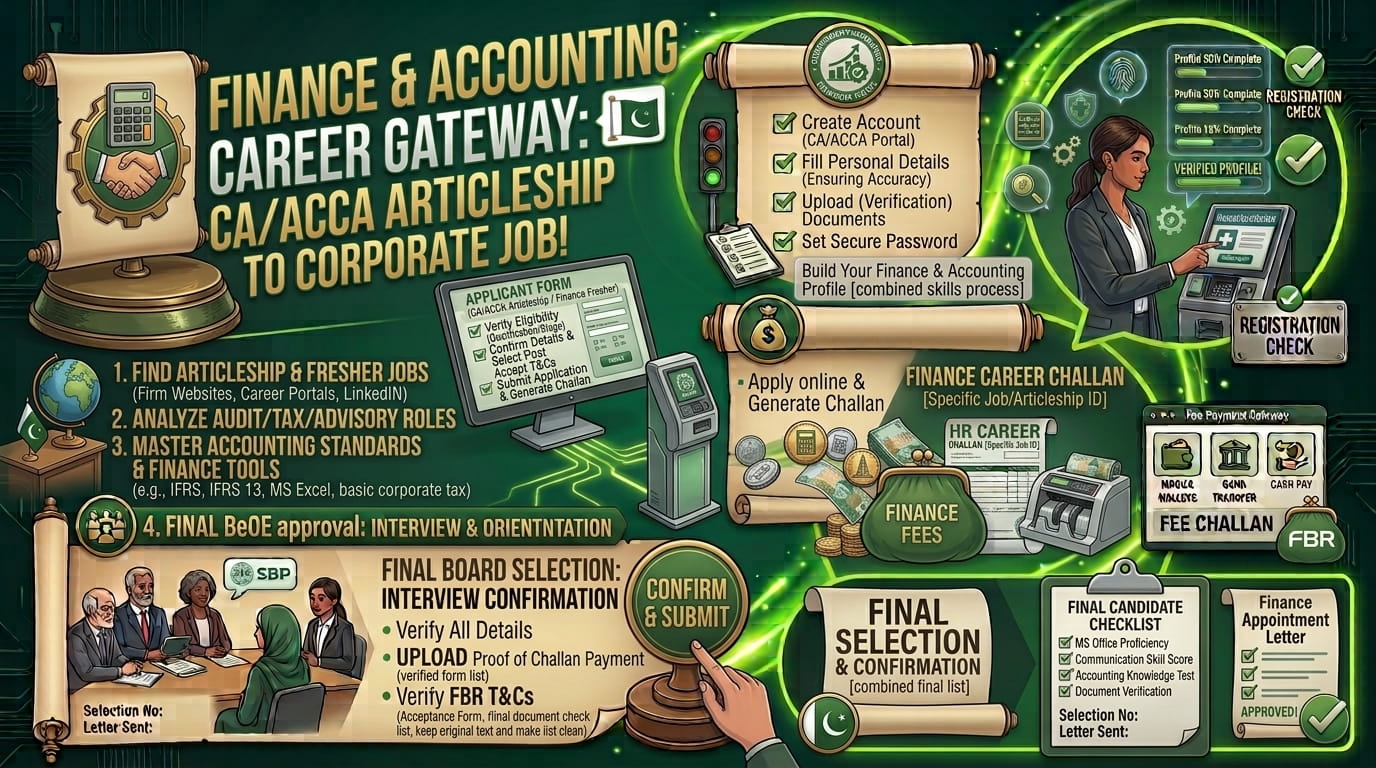
Ask ten commerce students what the actual difference between CA and ACCA is, and at least seven will give you a confident, completely wrong answer. I used to be one of them — I genuinely thought articleship meant unpaid internship-style grunt work for years before you “become” anything. Turns out that’s not even close to accurate, and that one wrong assumption alone stops a lot of otherwise capable students from even seriously considering this path.
First — Understand These Are Genuinely Different Paths, Not Just Different Names
This is where a lot of confusion starts, so let’s clear it up first. CA (Chartered Accountancy), administered by ICAP (Institute of Chartered Accountants of Pakistan), is the more locally-rooted, rigorous qualification — required specifically for statutory audit work in Pakistan, and it’s a longer journey, typically 4-5 years including a mandatory 3.5-year articleship. ACCA (Association of Chartered Certified Accountants), a UK-based global body, is generally considered a faster route into the job market, offers stronger international mobility (UAE, UK, and beyond), and Pakistan actually has one of the largest ACCA student populations in the world.
Genuinely worth knowing: ACCA provides a pathway to eventually obtain ICAP membership too, through mutual recognition — a good number of ambitious finance professionals in Pakistan pursue exactly this combined route.
The CA Path: Articleship Explained Properly
Step 1: Register with ICAP and choose your entry route.
There are different entry schemes — Full-Time scheme entrants complete PRC (Pre-requisite) and then CAF (Certificate in Accounting and Finance) before starting their training, while Trainee scheme entrants begin their training contract first and complete PRC, CAF, CFAP, and MSA levels alongside their actual work. If you’re coming from a relevant university degree, check if your institute is an ICAP-specified degree-awarding institute (SDAI) — this can grant real exemptions on several PRC and CAF papers based on your transcripts.
Step 2: Find and apply to an ICAP-approved training organization.
ICAP publishes a city-wise list of approved audit firms and TOoP (Training Organization other than Practice) organizations directly on its website. Browse this for your target city, or across multiple cities if you’re flexible on location.
Step 3: Apply directly, often by email, and increasingly this can be done remotely.
Most firms list recruitment email addresses on their own websites — use a clear, professional subject line (“Application for CA Articleship 2026 – Your Name”), attach your documents as PDFs, and keep the email body concise. Hamza’s advice from his own search: don’t underestimate LinkedIn, Rozee.pk, and Indeed Pakistan either — articleship openings get listed there regularly too, and LinkedIn specifically lets recruiters find you if your profile is properly filled out.
Step 4: Prepare for a real, multi-stage interview process, especially at bigger firms.
Expect technical CAF-level questions, scenario-based queries, and often a personality/fit assessment. Hamza’s specific observation: the Big 4 (PwC, Deloitte, EY, KPMG) run genuinely multi-round processes, while smaller firms tend to move noticeably faster — worth factoring into your timeline expectations if you’re choosing between applying broadly or targeting specifically.
Step 5: Understand articleship is a paid, 3.5-year practical training contract.
This is genuinely important to know upfront — you’re not working for free. ICAP mandates a minimum stipend, though the actual amount varies significantly by firm category: Big 4 and Category A firms typically pay somewhere between PKR 25,000-60,000/month depending on your training year, mid-tier Category B firms generally offer PKR 15,000-35,000, and smaller Category C firms pay closer to ICAP’s revised minimum stipend rate. Always check ICAP’s current stipend guidelines or your specific firm’s offer letter for the latest figures, since these get periodically updated.
Step 6: Balance your studies and work simultaneously — this is genuinely the hardest part.
Hamza’s honest reflection on this stage: managing actual audit files, tax returns, and client work while also preparing for CFAP and MSA exams during his training contract was the single most demanding stretch of the whole journey — real discipline and time management, not just intelligence, is what got him through it.
The ACCA Path: A Genuinely Different Entry Experience
Hamza’s friend, Bilal, went the ACCA route, and his path looked meaningfully different from day one.
Step 1: Register with ACCA and start clearing papers at your own pace.
Unlike CA’s structured articleship-first-or-exams-first schemes, ACCA gives you more flexibility in how you sequence your papers alongside work or study, which Bilal specifically valued given he wanted to start earning sooner.
Step 2: Look specifically for “ACCA Trainee” or “Training Contract” listings.
Big 4 firms and major banks in Pakistan offer structured training contracts that specifically fund your ACCA study while providing the required Practical Experience Requirement (PER) for eventual membership — a genuinely efficient combined path. ACCA’s own careers portal (jobs.accaglobal.com) lists Pakistan-specific openings directly, filterable by city and entry level.
Step 3: Apply even while part-qualified — this is a real, common entry point.
A lot of genuine listings specifically want “part-qualified ACCA with a minimum of 8-9 papers cleared” or similar — you don’t need to be a full affiliate or member to start working in a real finance role. Some UK-based accounting/outsourcing firms operating out of Pakistan specifically hire ACCA students still mid-qualification for trainee accountant roles, often explicitly offering exam fee reimbursement as part of the package.
Step 4: Consider outsourcing/back-office firms as a genuine, faster entry point.
This was specifically Bilal’s actual path — a UK-based accounting and tax firm with a back-office team in Lahore hired him as an ACCA Trainee while he was still mid-qualification, giving him real, practical exposure to UK accounting, VAT, and statutory accounts work. These firms are genuinely common in Pakistan’s finance sector and often move faster and are less competitive than direct Big 4 applications.
Step 5: Build practical software and tool familiarity alongside your papers.
Employers consistently prefer candidates with actual hands-on accounting software knowledge, not just exam-passed theory — worth building this up during your studies rather than assuming your ACCA papers alone will carry an interview.
A Real, Honest Comparison Between the Two Paths
Hamza’s CA path: Longer overall timeline (4-5 years total), tougher exam structure with fewer exemptions and genuinely high failure rates at various stages, but leads to a qualification that’s essential for statutory audit work specifically and carries strong long-term respect and earning potential within Pakistan.
Bilal’s ACCA path: Faster entry into real paid work, more flexibility in how he sequenced exams around his job, genuinely strong international mobility if he later wants to work in the UAE or UK, and Big 4/bank training contracts that fund his continued study while he’s already earning and building real experience.
Both are legitimate, respected routes — the actual right choice depends on whether you’re prioritizing local audit-specific credibility and are willing to commit to CA’s longer, more rigorous structure (Hamza’s case), or want faster market entry with strong international flexibility (Bilal’s case).
What to Realistically Expect Salary-Wise
For CA articleship trainees, stipends realistically range from PKR 15,000 at smaller firms up to PKR 60,000 at Big 4 firms depending on training year, with pay climbing substantially once you actually qualify as a Chartered Accountant. For ACCA, entry-level trainee/part-qualified roles commonly start around PKR 30,000-90,000/month depending on the firm tier and role (audit-focused roles at Big Four/mid-size firms often starting PKR 50,000-90,000), with fully qualified ACCA members’ packages varying widely — often above PKR 200,000/month at multinational companies or large audit firms once experience builds, though this depends heavily on communication skills, leadership ability, and which specific industry or firm you land in.
Common Mistakes People Make
Choosing CA or ACCA based purely on peer pressure rather than your actual timeline and goals. If international mobility and faster market entry matter more to you, ACCA’s structure genuinely fits better; if you specifically want to build a career in Pakistan’s statutory audit space, CA’s local credibility is hard to substitute.
Not checking ICAP’s approved firm list before applying broadly. Wasting applications on organizations not actually approved for articleship training means the time won’t count toward your mandatory practical training requirement.
Underestimating how demanding balancing studies and work actually is. Both paths require sustained discipline over years, not just strong initial exam performance — pace yourself realistically from the start.
Only targeting Big 4 firms and ignoring smaller firms or outsourcing companies. As shown with Bilal’s actual path, mid-tier and outsourcing/back-office firms often provide genuinely valuable, faster entry points with real practical exposure, even if the brand name isn’t as prestigious initially.
Not building practical software/tool skills alongside exam preparation. Employers consistently value hands-on accounting software familiarity — don’t treat your papers as the only credential that matters in interviews.
Final Thoughts
Both CA and ACCA genuinely remain among the most financially rewarding, respected professional paths available to commerce and finance-inclined graduates in Pakistan — the actual difference is timeline, rigor, and career geography, not one being objectively “better” than the other. What matters most, based on watching both Hamza and Bilal go through this, is understanding the real structure before committing years to it — knowing that articleship/training contracts are paid (not free labor), knowing which firms are actually approved, and going in with realistic expectations about how demanding balancing work and exams genuinely is.
Hamza’s honest reflection on his own CA journey so far: “Sabse mushkil hissa yeh nahi ke exams tough hain — mushkil yeh hai ke kaam aur padhai dono sath chalane parte hain, saalon tak.” The hardest part isn’t that the exams are tough — it’s that you have to run both work and study together, for years. Bilal’s honest counterpoint from the ACCA side: “Mujhe jaldi kaam mil gaya, lekin papers clear karna apni speed pe manage karna bhi khud hi ki zimmedari hai.” He got real work faster, but managing his own pace through the papers was entirely on him. Both true, both valid paths — just genuinely different journeys.
Official resources worth bookmarking:
- ICAP (for CA registration and approved firm list): https://icap.org.pk
- ACCA Global Careers Portal (Pakistan listings): https://jobs.accaglobal.com/jobs/pakistan
- ACCA Global (registration and exams): https://www.accaglobal.com